About
A short outline of why this site exists.
About this site
My family lived in Danzig for more than two hundred years.
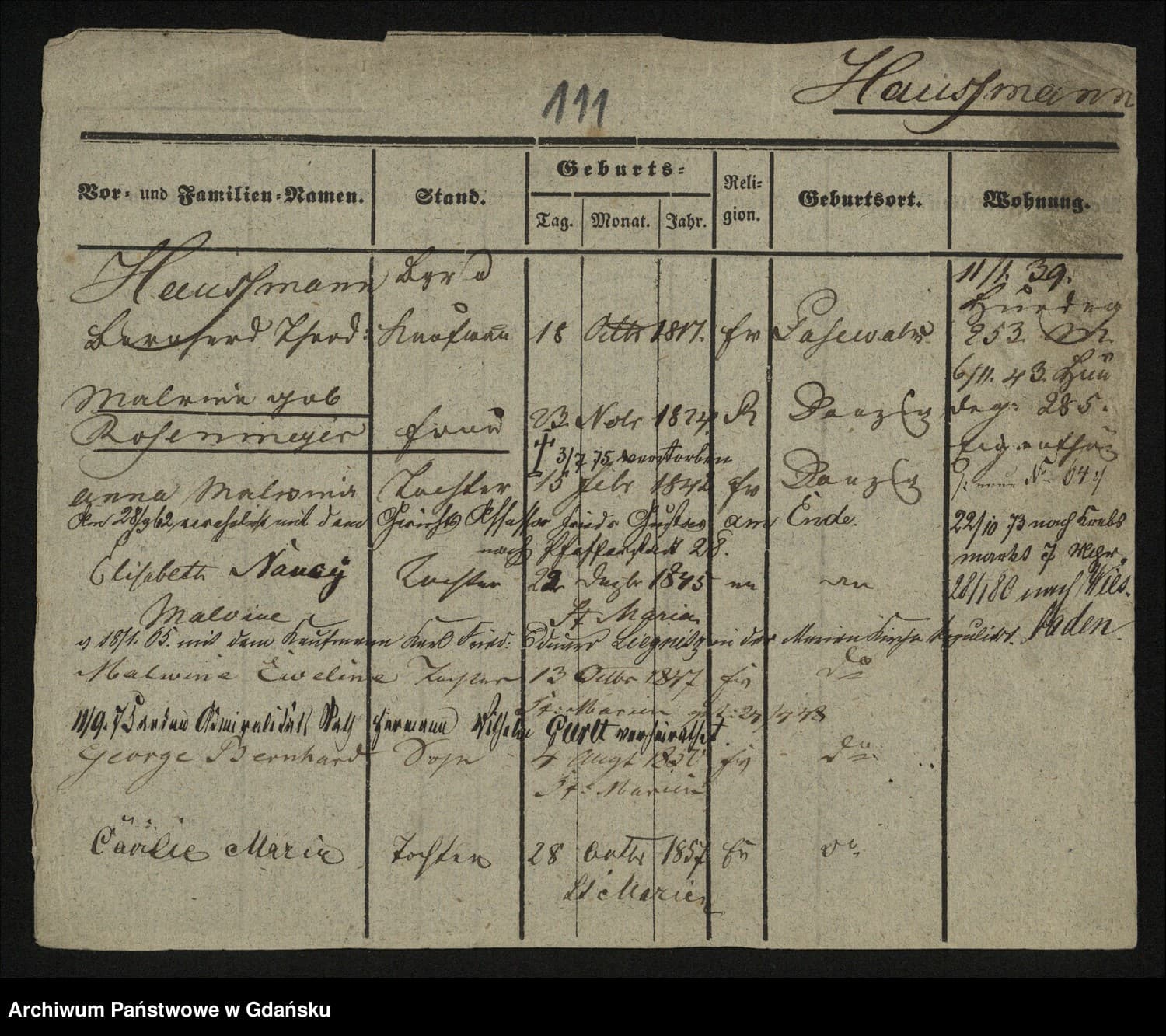
My third great-grandfather, Bernhard Theodor Haussmann, arrived around 1840 and built one of the city's notable merchant and shipping firms. He operated out of a counting house on Hundegasse — today Ulica Ogarna — trading grain and running a fleet of sailing vessels that worked the Baltic. He served on the city council from 1858 to 1868. His entry exists in Gedanopedia, the scholarly encyclopedia of Gdańsk history, which is an unusual degree of documentation for a private ancestor. Before him, another branch of the family — the Rosenmeyers — were established merchants in the city as well, with their own presence at the Artushof, the great trading hall on Langer Markt that served as the commercial heart of Danzig for centuries.
The family lines go back further still, into the 18th century, through generations of preachers and musicians and merchants whose lives are recorded in parish registers and city records. Danzig was not a place this family passed through. It was home, continuously, for over two hundred documented years.
The last of that generation was my grandmother, who was born in Danzig Langfuhr. She was among the family members forced to flee in 1945 as the war closed in, some making it out on the last ships departing the port before the city fell. What they left behind — their homes, their records, the streets they had walked for generations — became, almost immediately, inaccessible in a different language.
That is where this project begins.
The research problem
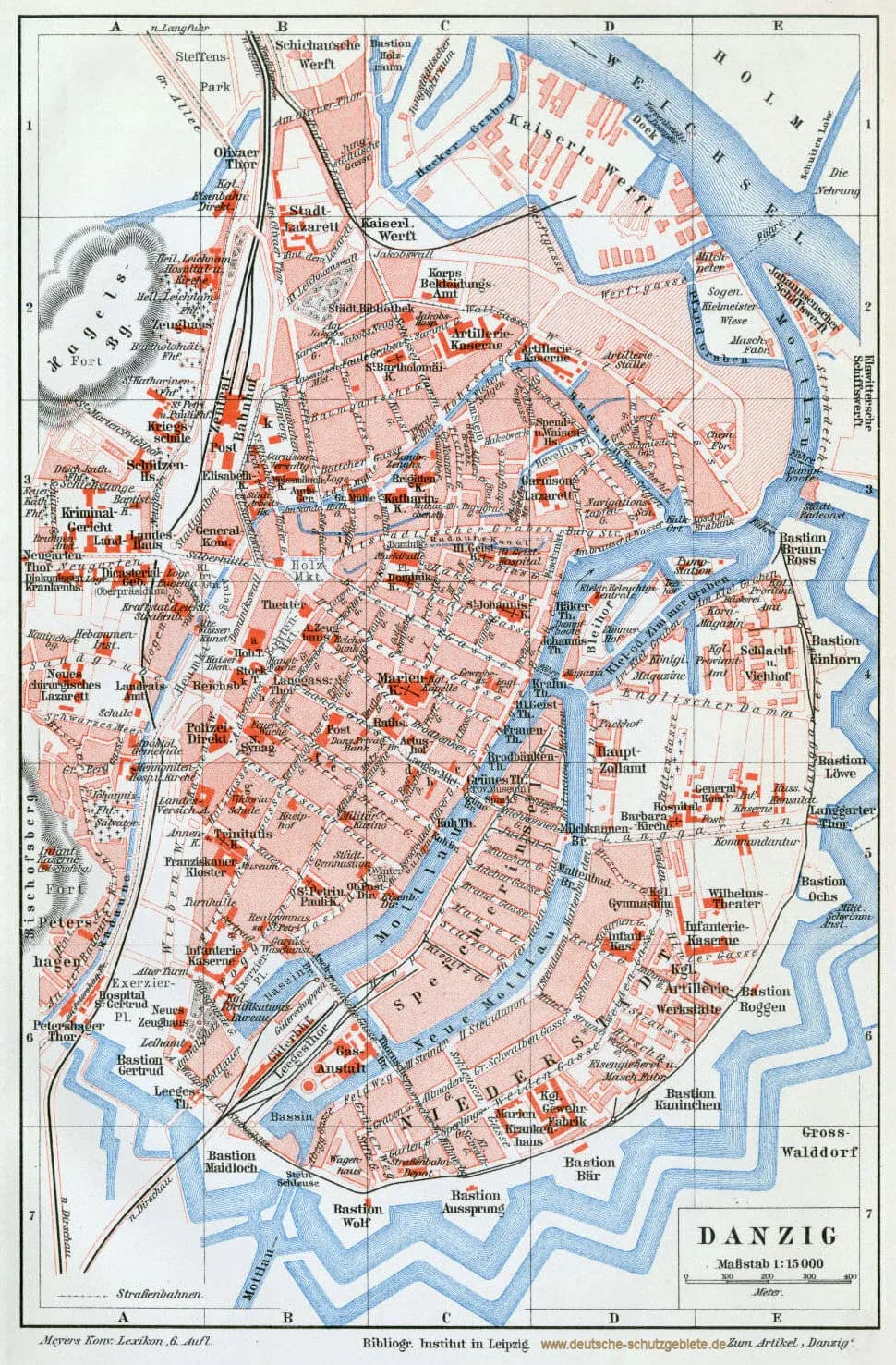
When I began working through the family history, I kept running into the same obstacle: a historical address in German, a modern city in Polish, and no reliable bridge between the two. There were scattered resources, but the most comprehensive, a site called danzig.at, had gone offline. Its content had simply disappeared.
This site is partly an effort to rescue and preserve that work, and to build on it with primary source research.
What this site is
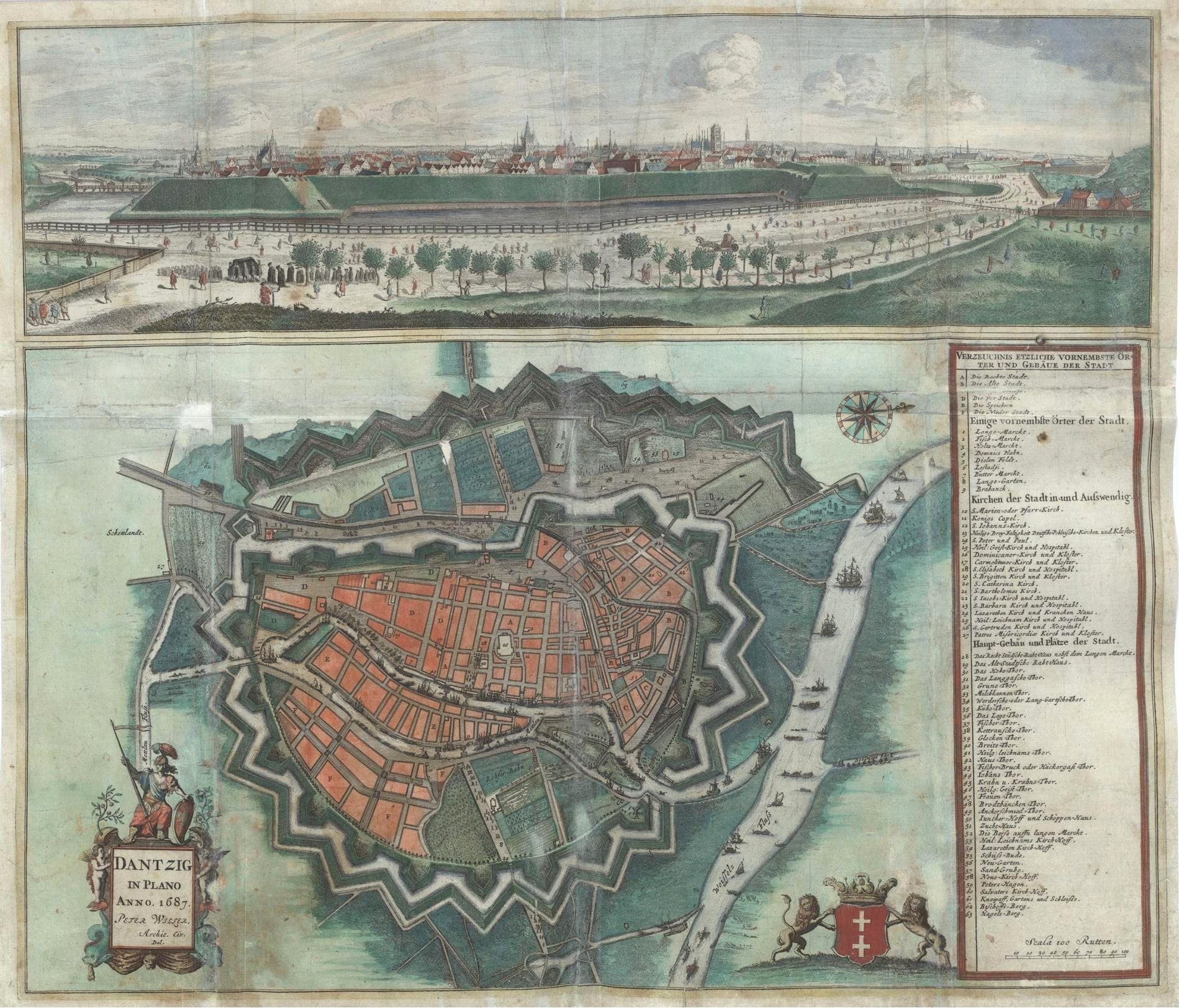
Streets of Danzig is a documented reference for the historic German street names of Danzig/Gdańsk and their modern Polish equivalents. Each entry is built from primary and scholarly sources: chiefly Walther Stephan's Die Strassen Danzigs (first published 1911, revised 1954), municipal records, and period city plans. Where secondary sources are used, they are cited. Where the record is uncertain or incomplete, that is noted explicitly.
The goal is completeness and accuracy. A street entry that appears here has been researched. I also have extensively used AI to help with organizing, translating, and keeping the site and content up to date.
What this site is not
This is not a tourism site, and it is not generated content. Every entry reflects actual documentary research. The German and Polish name mappings are sourced, not assumed. The personal family history behind the site is not decoration — it is the reason the research exists, and it shapes which sources get pursued and how deeply.
On sources and methodology
Walther Stephan's work remains the foundational reference for this subject. He documented Danzig's street history with a rigor that has not been matched since, and where his 1911 and 1954 editions differ, both versions are noted. The archived content from danzig.at is treated as a secondary source and cross-referenced against Stephan and other records wherever possible. Street name changes after 1945 are documented using Polish municipal records and the standard scholarly literature on the Polonization of Danzig's urban geography.
Who built this
I am a descendant of Danzig — not a professional historian, but a genealogist by necessity and a researcher by habit, with two centuries of documented family history in the city I am writing about. I built this site because the resource I needed didn't exist, and because the one that came closest had vanished.
If you are researching Danzig family history and have a question about a specific street or address, [you are welcome to reach out]. If you have access to sources, photographs, or documents that would improve an entry, I am glad to hear from it.
Sources
Images are sourced responsibly, either from sites with permission, or from Facebook groups centered around Gdansk.
Everything here is a work in progress. More things:
Fotopolska images of old Gdansk and other now Polish towns
Wikipedia also has a short list of street names: Liste von Strassen Danzigs
For those of you who care, this site is hosted in the USA. All source code is freely available on Github, and the content is managed in Contentful. I periodically put backups of all content into Github.